If you’ve ever stood on a factory floor, programming station, or even a residential HVAC unit, you know control panels are the unsung workhorses of so many systems. And at the heart of every control panel? Switches. Picking the wrong switch isn’t just an inconvenience—it can throw a whole line offline, cost thousands in downtime, or even pose a safety risk. As a switch supplier who’s been fielding panic calls from technicians and plant managers for over a decade, I’ve seen just how many people skip the critical steps to get this right. Most just grab the first switch that fits the cutout or matches the voltage, and that’s where mistakes start. Let’s break down how to choose a switch for your control panel, no jargon, no guesswork—just real-world lessons I’ve learned helping people fix bad switch choices. Switches

First, start with the basics, but don’t skip them. I once worked with a plant manager who installed a 15A toggle switch for a 12A circuit he thought was “close enough.” Six months later, that switch fused shut, taking out the entire assembly line’s conveyor system. The problem? He didn’t calculate the inrush current— that sudden spike when motors kick on, which is always higher than the steady-state current. For motor-driven circuits, that’s usually 2 to 3 times the rated current. So if you have a 10A motor, don’t reach for a 10A switch—opt for a 20A or 25A rated switch, at minimum. Voltage is another non-negotiable. A switch rated for 24V DC will not handle 120V AC, even if the current is the same. The electrical world’s standards for voltage rating aren’t arbitrary; they’re tested to prevent arcing, which is how fires start inside control panels. Always check both voltage and current, and leave a little headroom—never run a switch at 100% of its maximum rating. That extra buffer is the difference between a switch that lasts 5 years and one that needs replacement every 18 months.
Next, consider the environment the control panel lives in. I learned this lesson early on when a customer in the Pacific Northwest kept returning switches for corrosion. His panel was mounted outdoors, exposed to salt air and rain, and he was using a standard indoor switch—one with a plastic base that wasn’t sealed. Most basic control panel switches have an Ingress Protection (IP) rating, which tells you how well they hold up against dust and water. For indoor panels in clean offices or labs, an IP20 is fine— that means it keeps out fingers and small debris. If your panel is in a dirty factory, near a washdown station, or outdoors, you need a higher IP rating. IP65 is the workhorse here: it’s dust-tight and resistant to low-pressure jets of water from any direction. Another big one is temperature. If your control panel is in a hot furnace room or a cold freezer, standard switches will fail. We had a food processing client who had switches melting in their oven room (yes, oven room—they bake ingredients at 350F, and the control panel was nearby). The standard switches we’d been supplying had a maximum temperature rating of 120F, which was way too low. Now we offer high-temperature-rated switches for that exact use case, and they’ve held up for 7 years with no failures. Conversely, for refrigerated warehouses, cold-rated switches that can handle sub-zero temps without getting brittle are a must. Don’t guess about your environment—list every factor: dust, moisture, temperature, even chemical fumes. If there’s any chance the panel is exposed to harsh conditions, spring for a switch that’s rated for it.
Then, pick the right switch type for the job. This is where most people get overwhelmed, but let’s keep it simple. Toggle switches are the most common—they’re tactile, easy to operate with gloves, and great for simple on/off tasks. But if you need something that stays on without holding it, a pushbutton is better. Pushbuttons come in momentary (they pop back out when released, perfect for start/stop functions) or maintained (they lock in place, great for longer operations). For systems that need to lock out power for maintenance, you need a key-operated switch. We supply these all the time—plant managers love them because only authorized personnel can turn off power, preventing accidental startup that can injure technicians. Rotary switches are another option, used when you need multiple settings—like selecting low, medium, and high speeds for a pump. I once had a customer use a standard toggle switch for a 3-speed fan, and it burned out because it was switching between loads too quickly. A rotary switch, designed to handle multiple load transitions, fixed that immediately. Also, think about the actuation force—how hard you need to press or flip the switch. If your control panel is in a high-vibration area, like a mining truck or a moving assembly line, a toggle switch with a strong spring return is better, to keep it from flipping on accidentally. A weak toggle in a vibrating line is just asking for a shutdown.
Don’t forget about compliance and safety. This is non-negotiable for any control panel used in commercial or industrial settings. Switches need to meet standards like UL, CE, or CSA, depending on where your facility is located. UL-listed switches have been tested to meet fire and electrical safety standards in North America, while CE marking is required for products sold in the European Economic Area. I once worked with a small manufacturer in Texas who tried to cut costs with unlisted switches for his medical device control panels. He failed his FDA inspection and had to recall 50 units—way more expensive than buying compliant switches. Also, if the switch is part of a safety system, like a emergency stop (e-stop) switch, it needs to meet specific safety standards. E-stop switches have to be red, mushroom-shaped, and require a deliberate twist or pull to reset, so you don’t accidentally hit them. That’s not a design choice—it’s a safety requirement. Never use a standard pushbutton as an e-stop; it won’t meet compliance codes and could put people at risk.
Once you’ve narrowed down the type, rating, and environment, think about long-term maintenance and availability. This is something that doesn’t cross most people’s minds until a switch fails. We’ve had customers come to us in a panic because a switch they installed was discontinued by the manufacturer, so when it broke, they had to wait 6 weeks for a custom order, costing them $20,000 in downtime. When choosing a switch, pick a model that’s widely available. As a supplier, we keep all our switch models in stock, so our customers never have to wait for a replacement. Also, consider how easy the switch is to access for maintenance. If a switch is buried deep in a crowded control panel, you need one that’s easy to pull and replace without unsoldering a dozen wires. Switches with quick-connect terminals, instead of screw terminals, cut replacement time in half. We always recommend quick-connect for customers who do their own maintenance, because it’s fast and less error-prone than stripping wire every time.
Let’s recap with a real example of how this works. Last year, a wind farm technician reached out to me. He had a control panel for a turbine’s brake system that was failing every 3 months. He’d been using a standard 120V AC toggle switch, rated for 15A. The wind turbine was mounted 200 feet high, exposed to constant wind, dust, and temperature swings from -20F in winter to 100F in summer. The standard switch wasn’t sealed, so dust was getting inside and causing arcing, and it wasn’t rated for the temperature extremes. We suggested an IP67-rated toggle switch, rated for 20A, 120V AC, and with a temperature range of -40F to 185F. We also included a quick-connect terminal for easy replacement. Six months later, he called to say those switches had run perfectly, no failures, no downtime. That’s the difference between choosing a switch by price and choosing it by all the factors that matter.
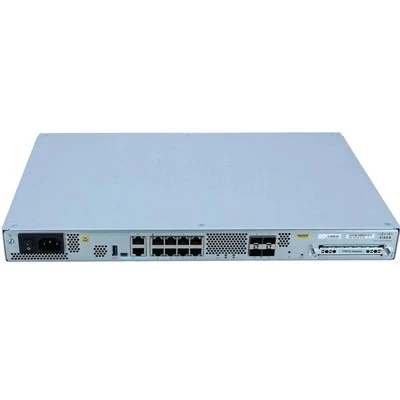
At the end of the day, choosing a switch for your control panel isn’t rocket science—it’s about matching the switch to its intended use, environment, and safety requirements. There’s no one-size-fits-all, but taking the time to calculate current, check IP ratings, pick the right type, ensure compliance, and plan for maintenance will save you from headaches, downtime, and safety risks down the line. If you’re not sure which switch is right for your control panel, don’t guess—reach out to our team to discuss your exact needs. We’ve helped hundreds of businesses across industries pick the right switches, and we’re here to help you too. Just tell us about your control panel’s environment, the circuits it’s powering, and any specific safety or maintenance requirements, and we’ll walk you through every step to find the perfect fit for your application.
Switches for Aruba References
- National Electrical Manufacturers Association (NEMA) Standards for Control Devices
- Underwriters Laboratories (UL) 61010: Safety Requirements for Electrical Equipment for Measurement, Control, and Laboratory Use
- International Electrotechnical Commission (IEC) 60947: Low-voltage Switchgear and Controlgear
AITI Tech Limited
AITI Tech Limited is one of the most professional switches manufacturers and suppliers in China for over 20 years, featured by quality products and low price. Welcome to buy bulk discount switches in stock here from our factory. If you have any enquiry about pricelist, please feel free to email us.
Address: 6F, Haogong Building, Yannan Road, Futian District, Shenzhen, China
E-mail: kelly@hkaiti.com
WebSite: https://www.hkaiti.com/
