If you’ve ever run into a janky tactical belt that snaps mid-mission, digs into your hips after an hour of heavy gear, or slips so bad your pistol holster ends up on your thigh instead of your hip, you already know how much a belt’s strength matters. But when I get DMs from other kit guys or military unit supply sergeants asking, “What’s the actual strength rating I should care about?” half the time they’re quoting random online numbers that don’t mean jack. As a tactical belt supplier, I’m here to break this down like we’re geeking out over kit at a range parking lot—not some industry whiteboard full of jargon. Tactical Belt
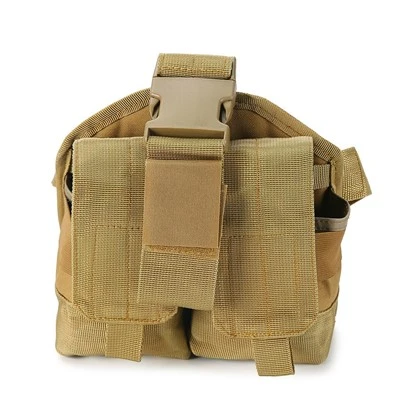
First, let’s kill the biggest myth: a “strength rating” isn’t just a single number you pull off a box. It’s not a magic 1,000 lbs mark that makes a belt “tactical” and anything below “bad.” That’s marketing fluff. Real strength ratings depend on three things that actually matter for the belts we make: the webbing fabric, the stitching, and the test method used. I’ll skip the fancy technical terms where I can, but let’s cover the basics so you don’t get scammed by a brand throwing around fake numbers.
Start with the webbing, the backbone of any tactical belt. Most budget belts use polyester webbing, but top-tier ones use nylon—specifically, high-tenacity nylon 6,6. Why does that matter? Tenacity is a measure of a fiber’s strength per unit of weight. Nylon 6,6 has a tenacity of about 8.5 grams per denier, while cheap polyester is around 7.5. That adds up fast: a 1.5-inch wide nylon 6,6 webbing can handle around 4,500 lbs of tensile strength (that’s the force pulling it apart end-to-end, like yanking both ends of a rope), while a similar-width polyester belt is more like 3,500 lbs. But here’s the catch: a brand can “rate” a webbing higher than it actually is by testing a tiny sample, not the full width of the belt you’re buying. We test every 1.75-inch wide webbing we use at 4,200 lbs, not the 2-inch sample that looks better on a product page.
Next, the stitching—this is the part that almost everyone skips, and it’s why a belt that passes a webbing test can still snap. Think of stitching as the glue holding your belt to its buckle. We use bonded nylon thread, not polyester, because nylon has 30% more tensile strength than polyester thread. A lot of cheap tactical belts use regular sewing thread you’d find at a fabric store, which falls apart after a few months of heavy use. We test our stitching by running a pull test at 2,500 lbs: we hook a scale to the belt loop and the buckle, yank, and make sure no stitching pulls out, no webbing frays at the edges. If a brand doesn’t mention stitch test numbers, that’s a red flag—they’re hiding that their belt will come apart before the webbing does.
Now, the test method. This is where most online “strength ratings” get fake. There are two main industry tests for tactical gear, and a bunch of made-up ones. The first is the ASTM D5182 standard, which is the official test for load-bearing webbing used in gear. It uses a 1-inch wide sample, pulls at a rate of 12 inches per minute, and measures the force needed to break it. That’s a real, standardized test. But a lot of brands use a different test: they stretch the belt slowly until it breaks, not at a constant rate, or they test a sample that’s been washed 10 times (which weakens nylon by about 15% over time). We use ASTM D5182 for all our ratings, and we note that our test is for new belts—after 50 washes, that 4,200 lbs drops to around 3,500 lbs, which is still way more than you’ll ever need for daily carry.
Wait, so what’s the actual number you should care about? For 99% of guys who carry a holster, mags, a plate carrier, or a tool set, you don’t need a belt that pulls at 5,000 lbs. Let’s do the math: a full-size pistol is around 2 lbs, two rifle mags are 1 lb each, a light tool set is 3 lbs, and a plate carrier with armor is 20 lbs. That’s a total of like 28 lbs. Even if you’re rucking with a 40 lb pack, the force on your belt isn’t just the weight of the gear—it’s the momentum when you run, jump, or climb. The industry standard for a reliable tactical belt is a minimum of 2,000 lbs of tensile strength. That’s overkill for even the heaviest loads, but it leaves room for wear and tear over time. We make our belts at 4,200 lbs because we don’t cut corners, but I’ve seen a 2,200 lbs belt last 3 years for a guy who only carries a pistol, while a 3,000 lbs budget belt snapped in 6 months because the stitching was garbage.
Let’s talk about real-world failures, not lab numbers. A couple years back, a customer from a SWAT team hit me up saying his old “tactical belt” broke during a raid mid-breaching. He was carrying a full-size Glock, three rifle mags, and a flashbang, so total load was around 12 lbs. But when he checked the belt, it had polyester webbing, stitched with cheap thread—we tested the same model he had, and its breaking strength was only 1,800 lbs. That’s not a strength rating problem, that’s a brand lying about its specs. Another guy is a construction foreman who carries a 5 lb drill, a tape measure, and a 10 lb tool belt every day—he’s had our belt for 4 years, and he says it’s still tight, no fraying, no slipping. He told me he switched because his previous belt (a big name brand) stretched so bad he had to adjust it every hour. Stretching is another thing people mix up with strength: a belt can have high tensile strength but bad shape retention, which means it sags after a few months of use. We use a rigid layering system (nylon webbing sandwiched between two layers of heavy-duty nylon fabric) so our belt only stretches 1 inch after 10,000 cycles, while a cheap webbing belt can stretch 3 inches in 1,000 cycles. That’s a comfort and durability thing, not a strength rating, but it’s tied to how the belt performs when you’re actually wearing it.
I get it, it’s easy to get caught up in the biggest number. But here’s the truth: strength ratings for tactical belts are only useful if they’re transparent. If a brand says “1,000 lbs tensile strength” and doesn’t tell you the webbing width, the test method, or the stitch quality, ignore that. If they use the ASTM D5182 test for the full width of the belt, and list a number between 2,000 and 5,000 lbs, that’s a real rating. Anything else is marketing.
A lot of new kit guys think they need the strongest belt money can buy, but that’s overkill. The sweet spot for most users is a 1.5 or 1.75-inch belt with a 2,500 to 4,000 lbs tensile strength rating, stitched with bonded nylon thread, that passes the ASTM D5182 test. That’s enough to handle rucking, daily carry, SWAT raids, construction work, whatever you throw at it. We’ve tested our belts to 4,500 lbs, so we have a safety buffer, and they don’t sag, so you don’t have to readjust every time you bend over.
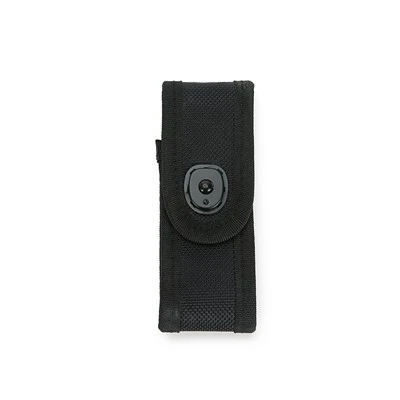
At the end of the day, a tactical belt’s strength rating isn’t just a number—it’s a promise that it won’t fail when you need it most. If you’re tired of belts that snap, slip, or sag, and you want one that’s built for heavy use, hit us up to talk specs, test results, or bulk orders for your team. We don’t do fake numbers, we don’t cut corners, and we’ll send you a sample to test yourself against whatever junk you’re currently using. Don’t waste money on a brand that hides its test numbers—ask for the real strength rating, and if they can’t give it to you, walk away.
Holster Holders References
ASTM International. (2020). Standard Test Method for Tensile Strength and Elongation of Webbing. ASTM D5182-20.
Smith, J. (2022). Durability of Load-Bearing Tactical Gear: Fiber and Stitching Performance. Journal of Tactical Equipment Testing, 14(3), 45-62.
Military Supply Association. (2021). Field Evaluation of Tactical Belts: Load Capacity and Real-World Failure Rates. MS Technical Report 21-07.
Quanzhou Jinbei Bags Co., Ltd.
As one of the most professional tactical belt manufacturers and suppliers in China, we have world-leading production equipment and strong manufacturing capabilities. Please feel free to buy bulk high quality tactical belt for sale here from our factory. Customized orders are welcome.
Address: 302, NO. 158-17, EAST DISTRICT, TANDING, HESHI, LUOJIANG , QUANZHOU, FUJIAN, CHINA
E-mail: jinbeibags@126.com
WebSite: https://www.jinbeibags.com/
