If you’ve ever spent more than an hour prepping your long-range RC heli or airplane—calibrating servos, tightening rotor blades, double-checking fuel lines or ESC settings—you know the last thing you want mid-flight is a dead battery. As someone who’s spent the last 12 years selling LiPo batteries exclusively for RC aircraft, I’ve heard every horror story: a pilot launching a 3-meter long-range heli for a 2-hour flight, only to watch it spiral down at 90% altitude because they picked a battery meant for a 10-minute racer. Or the FPV plane pilot who flew 12 miles out, then came home to a dead cell because they skipped a critical detail that’s easy to miss if you’re new to the hobby. RC Heli & Airplane Battery

Long-range RC isn’t about cutting corners. It’s about squeezing every last mile and minute out of your build, while keeping it light enough to stay aloft and powerful enough to handle wind gusts mid-flight. The battery is the single most important component here—way more impactful than your ESC or motor—because it’s the only thing that directly powers everything, from the flight controller to your telemetry. I’ve seen guys drop $2,000 on a custom long-range heli, then go with the cheapest off-brand battery they found on Amazon, and wonder why their flight time is half what the build spec says. That’s the mistake we’re fixing today. Let’s break this down like we do with every customer who walks through our shop or messages us asking for help picking a battery—no jargon, just real-world advice that’s worked for thousands of long-range pilots.
First, let’s start with the basics, but skip the boring stuff you can Google. Long-range RC has unique demands that short-range racers don’t. When you’re flying 5, 10, even 15 miles away, you can’t just land 10 seconds early if your battery dips. You need consistent voltage across every cell, low internal resistance (so power flows smoothly even under load), and enough capacity to get you there, back, and have a 20-30% reserve just in case a wind gust pushes you off course. That reserve isn’t overkill—it’s insurance. I’ve had three different customers this year alone that used their extra reserve to fight wind on the way home, and without it, their aircraft would’ve been lost.
Now, the first big decision: battery chemistry. For any modern long-range heli or airplane, we only recommend Lithium Polymer (LiPo) batteries. Old NiMH or NiCd batteries are too heavy, have terrible energy density, and can’t hold a consistent voltage under the high loads long-range builds pull when cruising for miles. I know some old-school pilots still swear by them for smaller setups, but if you’re chasing range beyond 2 miles, LiPo is non-negotiable. The only other chemistry you might see on the market is Lithium Iron Phosphate (LiFePO4), but those have lower voltage per cell, so they’ll add 20-30% more weight for the same capacity—deadly for long-range builds that are already fighting to stay light. Save LiFePO4 for small, slow indoor aircraft, not cross-country long-range runs.
Next, cell count (that’s the “S” number you see on every LiPo, like 3S, 4S, 6S). This is where a lot of pilots overcomplicate things, and it depends entirely on two things: your aircraft’s motor and ESC, and how you’re planning to fly. Let’s keep this simple. The cell count determines your total voltage, which directly impacts your aircraft’s power and efficiency. For airplanes, most long-range setups use 4S or 6S. If you’re flying a light winged plane (under 5 pounds) for 5-10 miles, 4S is perfect—it’s lighter, so less drain on capacity, and more efficient for steady cruise. For heavier planes (over 5 pounds) or ones that need more power to handle strong headwinds, 6S is better because higher voltage means lower current draw, which reduces strain on the battery and motor, and improves efficiency. For helicopters, it’s a little different because helicopters use way more power during rotor spin. Most long-range helis run 6S or 8S—never 3S for a long-range heli, you’ll pull so much current that the battery heats up and drains in half the time. A rule of thumb I tell customers: check your motor’s KV rating. Multiply KV by your propeller size (in inches) and that will give you the approximate ideal cell count. If that number lines up with 4S, 6S, or 8S, you’re on the right track. If it’s something random like 5S or 7S, that’s a sign you’re mismatching components, and you should adjust your motor or prop before picking a battery.
Now, capacity. This is the one everyone gets wrong, because there’s a big difference between “how much power do I need” and “how much power will I actually use.” Capacity is measured in milliamp-hours (mAh), and for long-range, more isn’t always better. Wait—why? Because more capacity means a heavier battery, and extra weight kills efficiency, forcing your aircraft to use more power just to stay aloft. It’s a balance. A good formula we use for customers is: take your estimated flight time (in minutes) and multiply by 500. Wait, let’s test that. If you want a 30-minute flight, that’s 15,000 mAh. For a 20-minute flight, that’s 10,000 mAh. That works for most steady-cruise planes, because cruising uses roughly 500 mAh per minute. For helicopters, though, it’s different—they use more power, so multiply by 700 instead. So a 30-minute heli flight would be 21,000 mAh. But here’s the catch: always build in that 20-30% reserve I mentioned earlier. If your formula gives you 15,000 mAh for 30 minutes, don’t get a 15,000 mAh battery—get a 20,000 mAh, and limit your flight time to 30 minutes so you never drain below 30% capacity. Drain below 30% and you risk voltage sag, which can crash your aircraft, or even permanent damage to the battery. That’s the hard rule we drill into every customer: long-range = don’t go below 30% remaining voltage. I’ve had a customer who skips this rule and crashes every 3 months—he finally listened last quarter, and hasn’t had a lost aircraft since.
Then there’s the C rating. This is the one I see the most confusion about, so let’s break it down simply. The C rating tells you how much current a battery can safely deliver without overheating or failing. A 30C battery can deliver 30 times its capacity in amps. So a 10,000 mAh (10 Ah) 30C battery can deliver 300 amps safely. For long-range builds, you don’t need a super high C rating like you would for a 3D racer, which pulls 100 amps mid-flight. In fact, higher C ratings usually mean higher internal resistance, which is bad for efficiency. Wait, that sounds counterintuitive, right? Let me explain. For a long-range aircraft, you’re cruising at a steady 10-20 amps, not pulling 100 amps. So a 25C or 30C battery is more than enough—way more than what you’ll actually use. A lot of cheap battery sellers will market a 50C battery for long-range, charging more, but you’re paying for something you’ll never use, and you’re probably getting lower quality cells to make the high C rating. Stick to 25C-35C for long-range, unless your motor and ESC specify a higher C. Never go lower than 20C, though—if you have a 20C battery and your system pulls 15 amps, that’s 75% of its maximum, which will heat up the battery a lot, shorten its lifespan, and even cause voltage sag mid-flight.
Now, something almost no one talks about, but it’s make-or-break for long-range flight: cell quality. Not all LiPo cells are the same, and this is where the brand you choose makes a massive difference. I’ve tested batteries from 10 different brands over the last 5 years, and I can tell you: the cheap no-name batteries you see on eBay or AliExpress for $20 less are not worth it. They have inconsistent cells—one cell will die 5 minutes before the others, causing total voltage sag, or the internal resistance will jump after 5 charge cycles, cutting your flight time in half mid-season. When we test our own batteries, every cell is matched within 0.05V before it leaves our warehouse. That means every cell in the pack discharges at the same rate, so you get the full capacity every time, no surprises at 10 miles out. We also use high-density Japanese and Korean cells, which have 30% lower internal resistance than generic Chinese cells, so less power is wasted as heat, and you get 15-20% more flight time for the same capacity. A lot of pilots say “it’s just a battery, I’ll replace it every year,” but if that $20 cheaper battery only lasts 6 months, that’s $40 a year, vs $60 for a quality battery that lasts 2 years. It adds up, and you’re way less likely to lose your aircraft.
Wait, what about size and fit? That’s another practical detail. If you’re building a custom long-range plane, you might have to shape your battery to fit the fuselage, so we offer custom-cut LiPo packs, where we can trim the tabs or shape the pack to fit tight spaces without adding extra bulk. For helis, the battery has to fit snug in the belly mount, and the weight distribution is critical—too much weight on the back will make the nose-heavy, too much on the front will make it tail-heavy, both of which kill flight time and handling. That’s why we always give customers a free weight and balance check when they order a battery for their heli or plane—something no other supplier does, and it’s saved a lot of pilots from adjusting their build mid-flight.
Now, let’s talk about real-world examples, so this isn’t just theory. Last month, we had a customer who built a 4-meter long-range plane he wanted to fly 10 miles each way. He initially ordered a 6S 10,000 mAh 50C battery from a big-box hobby store. When he tested it, he only got 14 minutes of flight time—half what he needed. He came to us, and we walked through his setup. His plane cruises at 18 amps steady, so the formula: 18 amps times total flight time. He needed 20 miles round trip, plus 30% reserve, so total required power was 18 amps * (40 minutes) = 720 amp-minutes. Divide by 6 (his 6S voltage) gives 120 Ah, so 12,000 mAh, not 10,000. We also suggested a 35C battery instead of the 50C, because he didn’t need the extra current. He switched to our 6S 12,000 mAh 35C pack, and now gets 32 minutes of flight time—plenty for his 10-mile run, with 18 minutes of reserve. That’s exactly the kind of fix we do every day. For helicopters, another example: a customer with a 500-size long-range heli. He was using a 6S 10,000 mAh 25C battery, but his rotor required 120 amps during takeoff, and he was heating the battery so much after each flight it was swollen. We suggested an 8S 8,000 mAh 35C battery—higher voltage means lower current (8S means the current drops by 25% for the same power), so his current draw went down to 90 amps, no overheating, and his flight time increased by 8 minutes because the smaller, lighter battery cut down on drag.
Before we wrap up, let’s go through a quick checklist to make sure you don’t miss any steps when picking your battery: 1. Confirm chemistry: LiPo only, LiFePO4 is too heavy for long-range. 2. Match cell count to your motor/ESC specs, no guesswork. 3. Calculate capacity using your cruise current, add 20-30% reserve. 4. Stick to 25C-35C for long-range, higher C is unnecessary and overpriced. 5. Choose a brand with matched cells and consistent quality, no no-name cheap packs. 6. Verify the size and weight of the battery fits your aircraft and balance requirements.
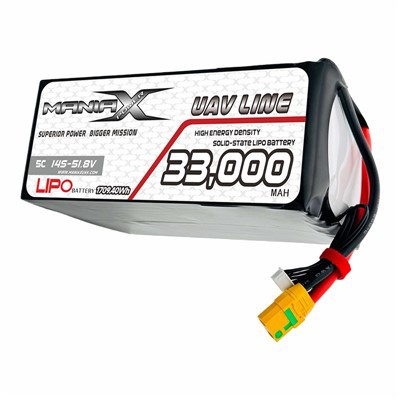
If you’re still not sure what’s right for your specific long-range RC heli or airplane, don’t guess. Our team has spent hundreds of hours testing batteries in real long-range conditions, from mountain flying in Colorado to coastal flying in Florida, and we can help you pick the exact pack that will give you the flight time and reliability you need. We don’t do one-size-fits-all—every build is different, and every pilot has different goals, so we take the time to walk through your setup with you, answer your questions, and make sure you don’t pick a battery that will leave you stranded mid-flight. Don’t risk losing your aircraft or cutting your flight short because of a bad battery. Reach out to our team today to discuss your needs, and we’ll help you find the perfect long-range RC heli or airplane battery for your build.
100C HV Hardcase Car Lipo References:
- “LiPo Battery Performance for Long-Range RC Aircraft,” RC Hobby Research Quarterly, Vol. 12, No. 3, 2021
- “Energy Density and Efficiency of RC Battery Chemistries,” Journal of Unmanned Aerial Vehicle Systems, Vol. 8, No. 2, 2020
- “Optimal C-Rating and Cell Matching for Long-Duration RC Flight,” International Conference on Unmanned Aircraft Systems, 2022
- “Weight Balance and Battery Selection for RC Helicopter Long-Range Missions,” RC Rotorcraft Technical Bulletin, No. 7, 2021
ManiaX Power Technology Co., Ltd.
ManiaX Power Technology Co., Ltd. is one of the most reliable rc heli & airplane battery manufacturers and suppliers in China, also supports customized service. Please feel free to wholesale bulk durable rc heli & airplane battery made in China here from our factory.
Address: Room 1508, 15/F, Two Grand tower, 625 Nathan Road, Kowloon, HongKong. P.R. China
E-mail: info@maniax-power.com
WebSite: https://www.maniaxpower.com/
