If you’ve ever stood on a production floor watching plastic parts emerge from an injection molding machine, you’ve probably noticed that the machine itself only tells half the story. I’ve spent 12 years as a plastic auxiliary equipment supplier, working alongside injection molders, extrusion lines, and thermoformers across automotive, packaging, and medical device industries, and I can say with certainty that the secret to consistent, low-waste production isn’t just in the main machine—it’s in the auxiliary equipment that supports it. Plastic Auxiliary Equipment
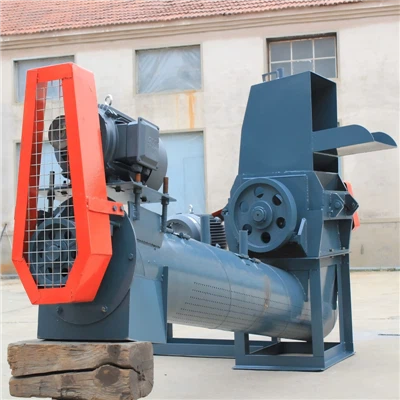
When customers first reach out to me asking, “What’s the cost-effectiveness of different plastic auxiliary equipment?” they’re usually looking for a quick number: “How much will this save me per hour?” But cost-effectiveness in plastic processing isn’t just about upfront price tags. It’s about how a piece of equipment fits into their existing line, how much waste it cuts, how long it lasts, and even how it impacts their energy bills and labor costs. Over the years, I’ve seen customers throw money at cheap auxiliary equipment only to deal with constant downtime, or overspend on premium gear that’s more than they actually need. Today, I want to break down the most common auxiliary equipment—dryers, loaders, temperature controllers, and granulators—their real cost-effectiveness, and what I’ve learned works for different types of operations.
Let’s start with one of the most misunderstood pieces in any plastic line: plastic dryers. For any process that uses hygroscopic resins—think nylon, PET, or TPU—moisture in the material is a killer. Even trace amounts of moisture cause splay marks, bubbles, and brittleness in finished parts, which means scrap, rework, and wasted material. When it comes to dryers, the two main categories are desiccant dryers and hot air dryers. A few years back, a customer in custom packaging brought me a quote for a $2,000 hot air dryer for a 500-pound per hour line, compared to a $8,500 desiccant dryer. They chose the hot air dryer to save money—and within three months, they were sending back 12% of their parts as scrap, adding up to $14,000 in wasted resin. Hot air dryers work for non-hygroscopic resins like polyethylene or polypropylene, but for hygroscopic materials, their low upfront cost is a trap. Desiccant dryers have higher upfront costs, but they reduce scrap by 8–15% and often pay for themselves in 6–18 months, depending on resin prices. I also tell customers not to overlook smaller features: a modular desiccant bed lets you replace only the saturated segment instead of the whole unit, cutting maintenance costs by 30% over five years, while energy-efficient heat recovery systems can lower operating costs by 25% compared to older models.
Next, material loaders. These are the workhorses that move resin from Gaylords or hoppers into the main machine, but again, cost-effectiveness varies wildly. The two main types are vacuum loaders and gravity loaders. A common mistake small molders make is using gravity loaders, which rely on gravity to pull resin from a bin to the machine. Gravity loaders are cheap, often under $500, but they only work for short distances—10 feet or less. If you have a 50-foot line, you’re manually refilling the resin bin every hour, which adds 2–3 hours of labor per shift, or about $15,000 a year in labor costs for a 10-shift operation. Vacuum loaders, which use a small blower to move resin, have upfront costs from $1,500 to $5,000, but they eliminate manual material handling entirely. I recently worked with a medical molder that switched from gravity loaders to two small vacuum loaders for a 100-pound per hour line. They eliminated 1.5 hours of labor daily, cut material contamination by 7% (since manual handling introduces dirt), and their payback period was just 10 months. Even within vacuum loaders, there are cost differences: single-phase units are cheaper for small lines, while three-phase, variable-speed models adjust air flow to match resin type, reducing resin degradation and extending dryer life. That extra $1,000 upfront saves an average of $2,000 a year on dryer maintenance and scrap from degraded material.
Temperature controllers (often called “hot water” or “hot oil units”) are another area where molder often makes bad calls on cost-effectiveness. These units maintain precise temperatures for molds, which directly impacts part cycle time and surface quality. I’ve seen shops skip temperature controllers entirely, using the main machine’s built-in heater, but that leads to inconsistent mold temperatures, cycle times that are 20–30% longer, and parts that need secondary polishing. A basic 1-kilowatt temperature controller costs $1,200, while a premium precision unit with PID (proportional-integral-derivative) control runs for $2,500. The difference? PID controllers adjust temperature within ±0.5°F, compared to ±5°F for basic units. For a line running 24/7 with a 60-second cycle, that can cut cycle time by 10–15%—meaning an extra 3–4 parts per cycle, which adds up to thousands of extra good parts per month. A customer in automotive exterior parts told me that switching from basic to PID temperature controllers cut their cycle time for a bumper clip part from 45 seconds to 38 seconds, adding 11,500 parts per month. At $0.20 profit per part, that’s $2,300 extra monthly, and the temperature controller paid for itself in less than a month. The catch: if you’re running low-volume, low-tolerance parts, a basic unit might work, but for high-volume or precision parts (medical, automotive), the precision of PID controllers is non-negotiable for cost-effectiveness.
Now, granulators—these are the units that grind scrap parts and runner material into regrind that can be reused in production. Granulators are often seen as a cost saver, but that’s only true if you choose the right one. The biggest mistake I see is buying an underpowered granulator, which can’t grind material fine enough, leading to oversized regrind that clogs machines or causes feed issues, or requires additional regrind processing. A small 5-horsepower granulator might cost $3,500, but if you’re running a line that produces 200 pounds of scrap per hour, that unit will overheat, leaving your scrap lumpy and unusable. A 10-horsepower granulator costs $6,000, but it can handle that same 200 pounds per hour, producing consistent regrind that can be mixed with virgin resin at a 20–30% ratio. Another factor: noise reduction and dust collection. Open-top granulators are cheaper, but they create loud noise (which requires hearing protection, adding labor costs) and plastic dust, which can contaminate regrind. Enclosed granulators with integrated dust collection cost 20% more upfront, but they eliminate extra labor for hearing protection and reduce regrind contamination by 10–15%. I recently helped a molder adjust their granulator choice: they’d been buying small open-top units that cost $3,000 each but needed replacement every two years due to overheating. Swapping for a 10-horsepower enclosed granulator that cost $6,000 means they’ve gone four years without replacing the unit, and their regrind yield went up 18%. That’s a no-brainer in cost-effectiveness—lower long-term costs, less scrap, and no extra labor for dust cleanup.
But here’s the part most molder don’t think about: total cost of ownership (TCO), not just upfront price. When a customer comes to me asking for cost-effectiveness, I always walk them through TCO over 5 years, not just the first quarter. For example, a premium desiccant dryer costs $10,000, while a budget model costs $5,000. The premium model uses 30% less energy (thanks to heat recovery) and has a 10-year warranty, compared to the budget model’s 5-year warranty. Over 5 years, the premium dryer’s energy savings alone add up to $8,000, and the budget model will likely need a replacement after 5 years, adding another $5,000. Suddenly, the “cheap” $5,000 dryer costs $10,000 in 5 years, while the premium one costs $10,000 upfront plus $2,000 in energy, totaling $12,000—but wait, no: the premium dryer lasts 10 years, so over 10 years, it’s $10,000 upfront plus $4,000 in energy, versus two budget dryers at $10,000 plus $6,000 in energy. The premium unit saves $2,000 over a decade, and that’s before factoring in downtime from breakdowns. I’ve seen budget dryers fail mid-production line, costing $2,000 in lost resin and downtime in a single shift.
Another TCO factor is compatibility. I’ve had customers buy a cheap loader that doesn’t work with their existing dryer, so they have to buy an adapter, which adds $1,500, or end up with a loader that damages resin pellets (because the auger is too sharp) leading to more scrap. That “cheap” loader ended up costing them $3,000 in extra fees and scrap in the first month. When I sell auxiliary equipment, I don’t just sell a product—I help customers match equipment to their line: if they run PET, I recommend a loader with a gentle auger; if they have limited floor space, I suggest a compact modular desiccant dryer instead of a large fixed unit.
For small shops or low-volume operations, cost-effectiveness means balancing upfront cost with immediate needs, not overinvesting in premium equipment they’ll never use. For example, a 10-pound per hour custom molder might not need a full desiccant dryer—they can use a portable desiccant dryer ($3,000) that they can move between lines, instead of a fixed unit that costs $7,000. The portable unit has slightly higher operating costs, but it’s still cheaper than buying multiple fixed units for different lines. For high-volume, 24/7 operations, the tradeoff shifts: investing in energy-efficient, high-capacity equipment that reduces labor and scrap pays for itself in months, not years.
I’ll be honest: there’s no one-size-fits-all answer to this question. What’s cost-effective for a small boutique molder making custom toy parts is not the same as what works for a large medical molder running 10 lines a day. The biggest mistake I see is treating auxiliary equipment as an afterthought, rather than a core part of production. You wouldn’t buy a race car engine and put cheap tires on it—same logic here.
If you’re tired of chasing scrap bills, unexpected downtime, or labor costs that eat into your margins, let’s talk. I’ve worked with molders across every segment of plastic processing, and I can help you map out what auxiliary equipment will actually move the needle for your operation, not just sell you the most expensive or cheapest option. No hard sales pitches, no hidden fees—just a honest look at what’s going to save you money in the long run.
Plastic Cleaning Equipment References
- Plastic Industry Association. (2022). Auxiliary Equipment Cost-Benefit Analysis for Injection Molding.
- European Plastics Converters Association. (2021). Total Cost of Ownership of Auxiliary Equipment in Thermoplastic Processing.
- Society of Plastics Engineers. (2020). Reducing Process Waste with Proper Auxiliary Equipment Selection.
Laizhou Yuening Machinery Co., Ltd.
As one of the most reliable plastic auxiliary equipment manufacturers in China, we warmly welcome you to buy cheap plastic auxiliary equipment made in China here from our factory. All customized machines are with high quality and low price. For pricelist, contact us now.
Address: Yuanjia Village, Luwang, Shahe Town, Laizhou City, Yantai City, Shandong Province
E-mail: yueningjixie@163.com
WebSite: https://www.ynplasticmachinery.com/
