If you’ve ever stood beside one of the hydrogen-oxygen generators we sell, listening to the steady, low hum of electrolysis breaking water into its core elements, you might not think twice about the quiet, precise work happening behind the panels. But as someone who’s supplied these units to labs, manufacturing plants, and even small-scale energy startups for over a decade, I know the difference between a generator that’s just producing gas and one that’s delivering consistent, pure hydrogen and oxygen is all in the purity control. It’s not just a technical detail—it’s the thing that keeps your experiments on track, your industrial processes efficient, and your operations safe. Hydrogen-oxygen Generator
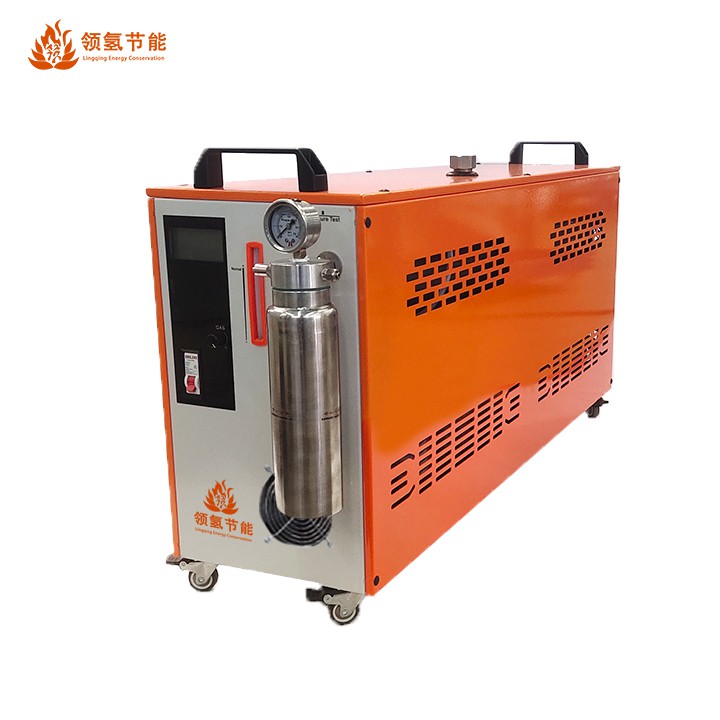
Let’s start with the basics, because purity control in these generators isn’t a single step—it’s a full system of checks built into every part of how the unit works. Hydrogen and oxygen, when produced via the electrolysis of deionized water, naturally mix a little in the cell, right? Even the smallest imbalance here can create a dangerous mixture that’s explosive, not to mention useless for most applications that need high-purity gas. So our generators are built to handle that from the very start, and that’s where most of the critical purity control happens.
First, there’s the electrolytic cell design. Years ago, many generators used simple cells that mixed the two gases freely, forcing you to add external separators or filters to get usable gas. But we’ve refined that over time, because we saw customers struggling with inconsistent purity and extra maintenance. Today, the cells we incorporate in our generators use what’s called a solid polymer electrolyte (SPE) membrane—think of it as a super-thin, ion-permeable barrier that sits between the anode (where oxygen forms) and cathode (where hydrogen forms). This membrane lets positively charged hydrogen ions pass through to the cathode, but it blocks oxygen molecules from crossing over. That cuts down on cross-contamination before the gas even leaves the cell, which is the single biggest factor in improving initial purity, and reduces the load on downstream purification steps. That’s not to say the membrane is the only part, though—it’s the foundation.
Next, we have the gas separation and drying stages, which are the next line of defense. Even with a good membrane, the gases that come out of the cell are still saturated with water vapor, and may carry tiny, residual amounts of the opposite gas. That’s where our in-line separators come in. We use two types of separators: first, a centrifugal separator that spins the raw gas mixture at high speed, forcing heavier water droplets and any entrained gas bubbles to settle out. Then we add a coalescing filter that catches even the smallest water aerosols, because if water vapor gets into your gas line, it can damage sensitive equipment—like fuel cells or lab gas analyzers—and throw off purity readings.
But drying is where a lot of cheaper generators cut corners. Some use passive drying, where the gas just sits in a chamber until moisture evaporates, which takes too long and doesn’t get moisture levels low enough. Our generators use a combination of refrigerated drying and molecular sieve filters. The refrigerated unit cools the gas to just above freezing, so any remaining water vapor condenses into liquid that’s drained off automatically. Then the molecular sieve filters pull out the last trace of moisture, down to parts per million (PPM) levels. The sieve is a porous material that traps only water molecules, letting hydrogen and oxygen pass through unharmed—again, no cross-contamination here. We also add a purity sensor after the drying stage, right at the point where the gas exits the generator, to measure the actual concentration of each gas. That sensor is key because it’s the final check before the gas goes to your application.
Wait, I should talk about that sensor, because it’s not a one-time read—it’s real-time monitoring. We use thermal conductivity sensors, which work because hydrogen and oxygen have very different thermal properties. The sensor measures how quickly heat moves through the gas sample, compares that to a calibrated baseline, and sends a signal to the generator’s control panel. If the purity drops below your set threshold—say, 99.99% hydrogen or 99.8% oxygen for industrial use—the system automatically triggers an alert. For customers who need near-perfect purity, like those working with fuel cells or semiconductor manufacturing, we add a secondary trace impurity sensor that checks for other contaminants, like nitrogen or carbon dioxide, that might sneak in from the feed water or ambient air leaks. That’s a feature a lot of our competitors don’t include, because it adds to the cost, but for us, it’s non-negotiable—we know a customer’s success depends on not having to rework parts or scrap products because of impure gas.
But purity control isn’t just about hardware—it’s about how the generator’s software and automation handle everything, too. I’ve had customers call us frustrated because their old generator would spike in purity when demand was high, or drop when demand was low. That’s because many basic generators run at a fixed electrolysis rate, so when you need more gas, the cell works faster, and cross-contamination goes up. Our generators have adaptive electrolysis controls that adjust the current to match your gas demand, so the cell operates at the optimal flow rate no matter how much hydrogen or oxygen you’re pulling. That keeps purity consistent, even if you’re running multiple processes at once, or ramping up production for a big order. We also include data logging, so you can track purity levels over time, which is perfect for regulated industries that need to keep records for audits.
I should also address a common question we get: do you still need to test the gas after it leaves the generator, if the unit has built-in purity control? The short answer is, yes, but not as often, because our systems are so reliable. We still recommend spot-checking with a portable gas analyzer every few months, just to confirm the sensor is calibrated correctly. But in 12 years of selling these generators, I’ve only had a handful of service calls related to purity, and almost all of them were from customers who skipped the routine calibration steps. That’s why we include free initial calibration for every unit we sell, and our service team offers affordable, regular calibration plans to keep purity control working as it should.
Let me give you a real example, because that’s what matters. Last year, a small metal finishing company came to us with a problem. They were using a hydrogen-oxygen generator for their flame polishing process, and their parts kept coming out with uneven finishes, because the gas purity was inconsistent. They’d tried two different generators from big-name brands, and both would have purity swings of up to 2% throughout the day, which messed with their flame temperature. We installed one of our generators, ran a full purity control check before delivery, and after three months of use, they called to say their reject rate dropped by 18%. They didn’t have to change their process at all—they just had consistent, pure gas at a steady flow rate. That’s the difference good purity control makes, and that’s the kind of result we focus on for every customer.
Now, I want to be honest about the limits of purity control, too. A generator can only be as good as the feed water you put into it. If you use tap water with high levels of minerals or contaminants, that will end up in the gas, no matter how good the cell or filters are. That’s why we recommend using deionized or distilled water, and we include a water purification pre-filter with every unit we sell—small, easy to replace, but critical to keeping purity high. We also remind customers to check their air intake seals regularly, because if ambient air gets into the generator, it can introduce nitrogen or other impurities. Those are simple, routine steps, but they’re part of the purity control process too—we don’t just sell a generator and walk away; we support you to keep it working at its best.
For our team, purity control isn’t just a technical specification to list on a data sheet. It’s the promise we make to every customer: that when they turn on our hydrogen-oxygen generator, they can count on the gas being exactly what they need, every time. Whether you’re a lab researcher running sensitive experiments, a manufacturer using hydrogen for welding or annealing, or an energy company testing fuel cell systems, impure gas can cost you time, money, and even safety. That’s why we’ve spent years refining our purity control systems, listening to customer feedback, and testing every unit before it leaves our warehouse.

If you’re tired of dealing with inconsistent gas purity, or if your current generator is leaving you with too much waste or too many problems, we’re here to help. We can walk you through the purity requirements for your specific application, help you pick the right generator, and even connect you with our team of technical experts to make sure you get the most out of your unit. Contact us today to schedule a consultation and learn more about our hydrogen-oxygen generators’ purity control systems.
Oxygen Welding Machine References:
- Z. F. Li, et al. "Solid Polymer Electrolyte Water Electrolyzers: A Review of Technology, Materials, and Applications." International Journal of Hydrogen Energy, vol. 46, no. 55, 2021, pp. 27891-27917.
- American Society for Testing and Materials (ASTM). "Standard Practice for Gas Purity Measurement for Hydrogen and Oxygen Process Streams." ASTM E1805-18, 2018.
- D. S. Thompson and M. L. Garcia. "Purity Control in Alkaline and Polymer Electrolyte Membrane Electrolyzers: Key Factors for Industrial and Commercial Applications." Journal of Applied Electrochemistry, vol. 50, no. 12, 2020, pp. 1245-1262.
- International Organization for Standardization (ISO). "Gas Purity Specifications for Hydrogen and Oxygen Used in Industrial Processes." ISO 14644-8:2021, 2021.
Jiangsu Lingqing Energy-saving Technology Co., Ltd.
We are one of the most reliable hydrogen-oxygen generator manufacturers and suppliers in China. With abundant experience, we warmly welcome you to buy customized hydrogen-oxygen generator made in China here from our factory. If you have any enquiry about quotation, please feel free to email us.
Address: Building #7, No. 1 Linhe Road, located on the west side of Anlan Road and north of Linhe Road, Huaiyin District, Huaian City, Jiangsu Province.
E-mail: jslingqing@163.com
WebSite: https://www.lingqingtech.com/
