Hey everyone, if you’ve ever shopped around for membrane modules (whether you’re setting up a wastewater treatment system, a desalination plant, or even a lab filtration rig), you’ve probably noticed something: not all modules are created equal. As a supplier who’s been in this game for over a decade, I get it—walking the line between “good enough” and “actually worth the investment” is tricky. Today, I’m breaking down the real standards we (and you, as end users) use to tell if a membrane module isn’t just a box with a membrane, but a piece of kit that’ll hold up, perform, and save you headaches down the line. No stuffy industry jargon, just straight talk based on what we see every day. Membrane Modules

First off, let’s kick this off with something most people gloss over when they’re comparing specs: membrane material integrity. Yeah, I know, everyone mentions “polymer” or “ceramic” on a datasheet, but that’s not the whole story. For example, when we test polyvinylidene fluoride (PVDF)—one of the most common materials for industrial modules—we don’t just check the brand; we run a burst strength test. Last year, a guy from a small food processing plant bought a cheap PVDF module from a no-name supplier, and within three months, the membrane tore when they ramped up pressure for their high-fat wastewater. That’s because the cheap version had gaps in the polymer cross-linking, so it couldn’t handle the 12 bar we required for his setup. Real standard here isn’t just “what it’s made of” but “how the material was processed.” We test every batch of our membrane sheets for tensile strength and chemical resistance—like, if your application uses a 2% sodium hypochlorite clean-in-place (CIP) solution, the membrane shouldn’t degrade after 50 cleaning cycles. If a supplier can’t show you those test results (not just a general datasheet bullet point), walk away. That’s a red flag.
Next up, module design and assembly quality. I’ve seen modules that look identical on the outside but fall apart inside. The two big parts here are the housing and the potting process (that’s the seal where the membrane ends attach to the tube sheet, right next to the inlet/outlet ports). Housing material seems straightforward: for freshwater, PVC is fine, but for seawater or harsh industrial effluent, you need fiberglass-reinforced epoxy (FRP) with a specific resin grade. A lot of cut-rate suppliers use lower-grade FRP to save cash, which cracks after 6-12 months in high-salinity environments—we had a client in Florida go through three modules in a year because of that. The potting part is where 80% of field failures happen, trust me. If the potting resin is uneven, or if there are voids (little air bubbles) in the seal, that’s a surefire way to get cross-contamination—clean water mixing with dirty feed, or vice versa. We use a two-part polyurethane potting resin, and our techs do a pressure test on every single module after assembly: 15 bar for 10 minutes, no leaks. We reject any module that even weeps a drop. Cheap suppliers might skip that test because it adds time and cost, but that’s why their modules are half the price. Buyer beware—if a supplier offers “bulk discounts” without quality checks, they’re cutting corners here.
Then there’s performance specs, but not the fake ones. A lot of sales reps will brag about “99% salt rejection” or “100 LMH flux” on their website, but those numbers are usually lab-tested in perfect conditions—no real-world feed water, no temperature swings, no continuous operation. The real standard here is how it performs in your actual application, and two key specs matter: flux rate and fouling resistance. Flux is how much water the module can process per square meter of membrane area per hour, right? If a module’s rated flux is 50 LMH but your feed water has 1,000 mg/L of total suspended solids (TSS), running at that rate will clog the membrane in a week. Our modules come with application-specific flux ratings—we’ll tell a wastewater client to run at 30 LMH, not 50, because we’ve tested that for their type of effluent. Fouling resistance is even bigger because fouling is the #1 reason modules need to be replaced early. Cheap membranes have larger pore size distribution—some pores are way too big, some are way too small, which lets larger particles get trapped in the membrane surface and build up a layer. Our membranes have a 0.1 micron average pore size with less than 5% variation, so particles only get stuck on the surface, where you can clean them off easily with backwashing. We run fouling tests in our lab with actual feed water from our clients, not just deionized water, to make sure those numbers hold up. If a supplier can’t give you field test data from similar sites, not just lab data, don’t take their word for it.
Wait, let’s not forget longevity and consistency across batches. A module that lasts 5 years is great, but if the next batch from the same supplier only lasts 2 years, that’s a problem. Consistency is huge in industrial operations—you need replacement modules that work exactly like the ones you already have, so you don’t have to rework your system. We track every batch of membrane modules from raw material delivery to shipment, and we maintain a quality control log that includes every test result. Last quarter, we had a small deviation in resin viscosity for the potting seal—we caught it during our pre-shipment test, pulled the whole batch, and adjusted our mixing process instead of sending bad modules. That’s the kind of quality control you can’t see on a datasheet; you have to work with a supplier that’s transparent about their process. Also, longevity isn’t just about membrane life—it’s about the housing and fittings. Our modules use NSF-rated O-rings that don’t harden over time, so you don’t have to replace the entire module just because a seal broke.
Oh, and one thing that’s often overlooked: support and documentation. I know this isn’t a “hard” quality standard, but it’s a big one for end users. If your module fails at 2 a.m. on a Saturday, do you have a supplier who’ll answer the phone or send a replacement fast? Do you have clear, step-by-step instructions for installation and cleaning, not a half-baked PDF that says “follow standard procedures”? We send every client a digital copy of our installation guide, plus a one-year support hotline for any questions. We also include a traceability code on each module—you can scan it to see which batch it’s from, when it was tested, and who our QC tech was. That might seem extra, but when you’re troubleshooting a field issue, being able to track exactly where the module came from is a lifesaver.
Now, let’s talk about the stuff that’s not a standard at all, even if suppliers try to make it one. A lot of people fixate on price, and while budget is important, it’s not a quality standard. I’ve had clients come to us after buying $200 cheaper modules that cost them $10,000 in downtime when the system shut down for three weeks to replace them. Certifications matter, but not just any certification—make sure it’s relevant. For example, if you’re working on drinking water, NSF/ANSI 61 certification is non-negotiable; if you’re in desalination, ASTM D4161 for FRP housing is key. A lot of cheap suppliers will print a “ISO 9001” logo on their website, but if you ask to see their ISO audit report, they can’t produce it. That’s a fake credential, so don’t fall for it.
At the end of the day, the standards for membrane module quality boil down to three things: durability that matches your application, consistency across all units, and transparency from the supplier. We don’t cut corners because we’ve seen the cost of doing that—we’ve had clients in the pharmaceutical industry who can’t afford a single day of downtime, so their modules have to be perfect. We work hard to make sure every module leaves our facility meets that bar.
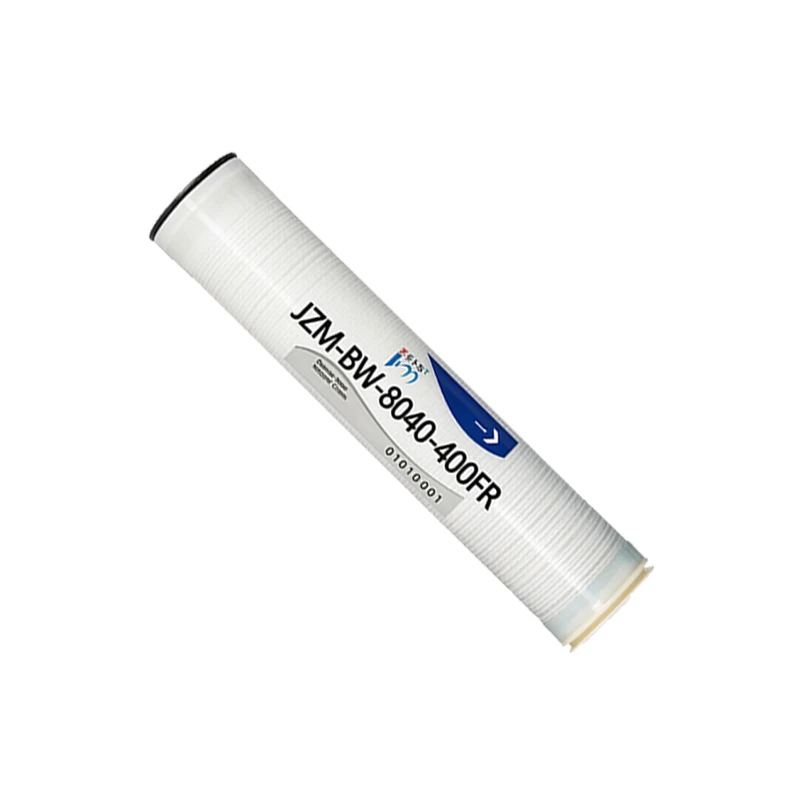
If you’re in the market for membrane modules, whether it’s for wastewater, desalination, or any other application, feel free to reach out to us to chat through your needs. We can walk you through our test results, our process, and make sure you get modules that’ll work for your system, not against it. Don’t hesitate to connect with us for a no-obligation consultation—we’re here to answer all your questions.
Membrane Modules References:
- Baker, R. W. (2012). Membrane Technology and Applications (3rd ed.). John Wiley & Sons.
- American Water Works Association. (2019). Standard Practice for Membrane Filtration for Water and Wastewater. AWWA Standard G450.
- Tiraferri, A., & Elyassi, B. (2020). Membrane Materials and Module Design for Industrial Filtration. Journal of Membrane Science, 598, 117652.
- International Organization for Standardization. (2015). ISO 9001:2015, Quality Management Systems — Requirements.
Shandong Jinzhimo Environmental Protection Technology Co., Ltd.
As one of the most professional membrane modules manufacturers and suppliers in China, we also support customized service. Please feel free to wholesale advanced membrane modules in stock here from our factory. For pricelist, contact us now.
Address: Room 101, Building 9, Shangri-La, Jinlong Road, Zhaoyuan City, Yantai City, Shandong Province
E-mail: zhanglina0778@126.com
WebSite: https://www.sdjzmhb.com/
