Let’s cut to the chase—if you’ve worked in pharma, you know flanges aren’t just random metal bits bolted to pipes. They’re the unsung heroes holding every process from raw material mixing to final sterile packaging together. Ask anyone in the quality or maintenance team, and they’ll tell you: botch a flange installation or maintenance, and you’re staring at contamination risks, downtime that costs thousands, or even a regulatory slap on the wrist. Which begs the question I get at least twice a week, “Are there flange tools specifically for the pharma industry?” Flange Tool

Spoiler alert: Yeah, there are. But not the generic stuff you grab at a local hardware store. Pharma flanges have unique demands, and off-the-shelf tools can’t keep up. Let’s break this down like we’re at a production floor coffee chat, no stuffy jargon (okay, a little, but only the stuff that matters).
First, let’s talk about what makes pharma flanges different. If you’re in oil and gas, a flange’s main job is just to hold pressure and keep a pipe from leaking. In pharma? No way. They have to withstand rigorous cleaning—think CIP (Clean-in-Place) cycles, hot caustic solutions, steam sterilization (SIP, Sterilize-in-Place), and maybe even harsh sanitizers. That means they can’t have any nooks, crannies, or rough edges where bacteria or leftover drugs can hide. And since FDA, EU GMP, ICH, and other global regulations are breathing down your neck every shift, traceability is non-negotiable. You need to track exactly what tools touched a critical flange, when, and by whom. Generic wrenches or flange aligners? They leave marks, scratch surfaces, or can introduce cross-contamination if you use them for both drug material and cleaning solutions.
That’s where pharma-specific flange tools come in. Let’s run through the ones our team supplies (since we live and breathe this) and why they’re not your average tools.
First up: Flange face resurfacing tools—for pharma-grade flanges. Most people think you can’t resurface a flange without pulling it out of the line, but pharma flanges often need on-site touch-ups after a tiny leak or alignment shift. Generic resurfacers are bulky, make too much metal shavings, and leave rough finishes that don’t meet pharma’s sanitary standards. Our pharma-specific resurfacers are portable, use precision-cut diamond bits instead of regular grinding wheels, and leave a surface finish of Ra < 0.8 micrometers (that’s the smoothness of a CD, for reference). Why does that matter? A rough flange face is a magnet for microbial growth and can lead to seal failure—something that’ll get your audit team knocking faster than a QC inspector during a batch check. Also, these tools are designed to be “dry” or use food-grade lubricants, so metal shavings don’t end up in your product. We also track every resurfacing run with a unique serial number linked to the flange’s asset ID, so you can prove to regulators exactly what work was done—no more guessing on paperwork.
Next, precision torque wrenches and bolt tensioners for pharma flanges. Bolt torque is make-or-break here. Too little, and you get leaks; too much, and you crack the flange or break a bolt, leading to contamination. Generic torque wrenches have big handles, are hard to calibrate, and often drift in accuracy after a few uses. Our pharma torque tools are calibrated to ISO 6789 (the gold standard for torque tools) and come with digital displays that log every single torque reading—no manual notes that get lost or fudged. They also have “tamper-proof” settings that only let you torque within a pre-approved range, so your techs can’t accidentally crank it too hard. For large flanges (like those on bioreactors), we supply hydraulic bolt tensioners that work evenly on all bolts, instead of torque wrenches that can create uneven pressure. That’s critical for maintaining a proper seal in high-pressure, sterile environments. And since pharma facilities need tools that won’t corrode, all these tools are made from 316L stainless steel—you know, the same metal used for bioreactor tanks. No rust, no cross-contamination, easy to wipe down between uses.
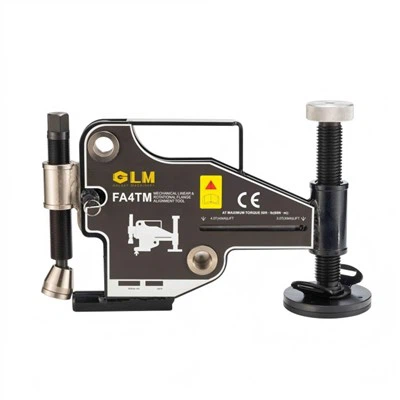
Then there are flange aligners specifically for pharma, not the kind for industrial pipe work. Generic aligners can scratch or mar the flange’s sealing surface, which is a huge no-no. Our pharma flange aligners have soft, non-marring jaws made from medical-grade silicone or PTFE (Teflon, basically) that grip the flange’s outer edge, not the critical sealing face. They also have adjustable tension so you can align flanges perfectly without damaging the surface, which is key for maintaining hermetic seals. We also have quick-release aligners for tight spaces—perfect for biotech suites where clearance is limited and downtime costs a fortune.
Wait, let’s not forget about valve flange tools, since pharma processes are full of valves. When you need to change a valve without draining a whole pipe (which is a massive waste of product and time), generic flange pullers can damage the valve or flange. Our pharma valve flange pullers are designed to distribute pressure evenly around the flange, so you don’t warp it, and they have no sharp edges that can create metal particles. Plus, they’re lightweight, so one tech can handle them instead of needing two people.
Now, let’s address the elephant in the room: Are these tools more expensive? Yeah, a little upfront. But let’s do the math. A single contamination event can cost a pharma company millions in lost product, regulatory fines, and downtime. Last year, I worked with a biotech client who had a flange leak that led to a full batch of monoclonal antibodies being scrapped—cost them $2.3M and a 6-week delay to get back online. Using generic torque wrenches for the install? The torque reading was off by 10%, which caused the leak. Our calibrated pharma torque tools would have caught that. Another client: They used a generic resurfacer on a critical flange, left metal shavings, and got a FDA 483 observation (that’s a red flag in audits) that cost them $500k in rework and audit fees. The right tools aren’t a luxury—they’re an investment in not losing your shirt.
Another thing: Pharma facilities have strict cleaning protocols for everything, including tools. Our flange tools are designed to be compatible with CIP and SIP. They don’t have hard-to-reach crevices where product residue can hide. You can steam them, soak them in caustic solutions, and even autoclave some of our smaller handheld tools. That’s a huge win—no more having to send tools out for specialized cleaning between jobs, which saves time and keeps your workflow moving.
Let’s talk about real-world use, not just specs. Last month, a team at a vaccine manufacturing plant reached out. They had a batch coming up in 48 hours, and a flange on their fill line was leaking. They grabbed a generic flange aligner to fix it, scratched the sealing face, and the leak got worse. We sent a portable pharma-grade aligner and torque wrench on an emergency run. Our tech got there in 2 hours, aligned the flange without a scratch, torqued the bolts to the exact reading logged in the system, and they got the line back up in 6 hours—no batch delay, no contamination risk. That’s the difference between generic tools and ones built for pharma.
Wait, but what about older facilities with non-standard flanges? A lot of pharma plants have older equipment that’s not brand-new, so off-the-shelf tools don’t always fit. We get that, so we do custom flange tool builds—just send us the specs of your flange (diameter, bolt count, sealing face type), and we’ll make a tool that fits your equipment. No forcing a one-size-fits-all tool that doesn’t work right.
So, to circle back to the original question: Yes, there are flange tools built exclusively for the pharma industry. They’re not just overpriced versions of generic tools—they’re engineered to meet the strict standards pharma operates under, keep your processes contamination-free, and help you pass audits without a hitch.
At the end of the day, we’re all on the same team here: keeping pharma processes safe, compliant, and running smoothly. If you’re tired of generic flange tools causing more problems than they solve, or dealing with messy audits because your paperwork doesn’t track tool work, reach out to us. We can walk you through exactly which tools fit your facility, answer any questions about compliance, and even demo them on-site so you can see the difference for yourself. No sales pitch fluff, just straight talk about keeping your flanges—and your operations—rock solid.
Hydraulic Gear Puller References: 1. International Organization for Standardization (ISO) 6789:2017, Assembly Tools for Fasteners — Requirements and Calibration Procedures. 2. U.S. Food and Drug Administration (FDA), 21 CFR Part 211 – Current Good Manufacturing Practice for Finished Pharmaceuticals. 3. European Medicines Agency (EMA), EU GMP Annex 10: Quality Management Systems.
Taizhou Galaxy Machinery Co., Ltd.
Taizhou Galaxy Machinery Co., Ltd. is one of the leading flange tool manufacturers and suppliers in China. We warmly welcome you to wholesale cheap flange tool for sale here from our factory. Good service and reasonable price are available.
Address: 18 Jiulong Road, Jiulong Town, Hailing District, Taizhou City, Jiangsu Province,China
E-mail: sales03@galaxy-machinery.com
WebSite: https://www.galaxy-machinery.com/
